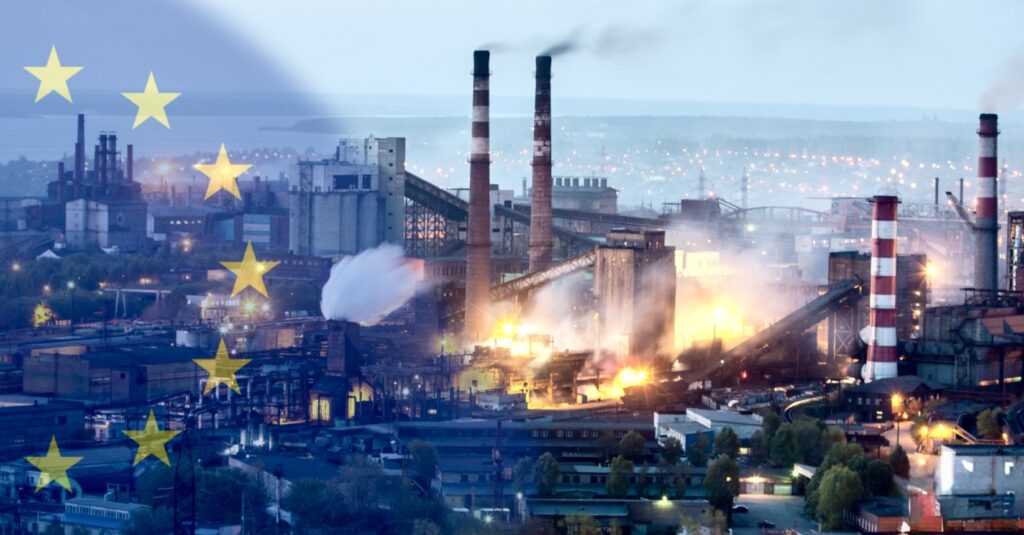
The European Union’s Carbon Border Adjustment Mechanism (CBAM), which has been fully applied since January 1, 2026, is already affecting Ukrainian exports, particularly in the metallurgy sector. According to international and Ukrainian sources, following the introduction of the mechanism, European clients began reducing or canceling contracts with Ukrainian producers, leading to a loss of market share and a decline in production.
In particular, ArcelorMittal Kryvyi Rih reports a significant drop in demand from European partners, which has forced the company to suspend part of its production capacity and reduce its workforce by several thousand employees. Similar signals are coming from other major market players, for whom the European Union is a key export destination. Industry representatives note that although CBAM is positioned as a climate policy tool, in practice it is reshaping competitive conditions in the market, strengthening the position of European producers.
The CBAM mechanism introduces additional costs for importers of goods from countries with less stringent climate regulations than those in the EU. At the same time, Ukrainian enterprises, already operating under wartime conditions—with damaged infrastructure, unstable energy supply, and logistical constraints—are facing additional financial pressure. Metallurgy remains one of Ukraine’s key sources of foreign currency revenues, with the EU being its primary export market.
Against this backdrop, there is a growing awareness within European political and expert circles of the side effects of CBAM for Ukraine. Discussions are emerging not only about the mechanism itself but also about parallel measures to strengthen the protection of the EU market, including restrictions on steel imports. This creates additional pressure on Ukrainian exporters.
At the same time, the Ukrainian government is preparing for negotiations with the EU regarding a possible transitional period or adaptation mechanisms. The Ministry of Economy emphasizes that the EU’s earlier refusal to grant a delay is not final, and that real data on the actual impact of CBAM on Ukraine’s economy will be a key argument in further discussions. Among the possible approaches is the use of Ukraine’s candidate status for EU membership to justify special conditions.
In parallel, domestic adaptation tools are being considered, including mechanisms to finance decarbonization through CBAM-like payments that would remain within Ukraine and be directed toward industrial modernization. The recognition of Ukrainian emissions verifiers is also under discussion, which would allow companies to report actual emissions data rather than rely on standardized estimates.
In practical terms, the current situation shows that CBAM is moving beyond a purely climate policy instrument and is directly influencing trade flows. For Ukrainian businesses, this creates risks of losing part of the European market and reducing foreign currency revenues, while for the state it necessitates both negotiations with the EU and the development of internal mechanisms to mitigate the impact. Given the role of metallurgy in the economy, further developments may have a systemic effect on export performance and industrial output.