Following a series of Russian attacks on retail, manufacturing and logistics infrastructure, the Ukrainian government has begun working with businesses on additional support mechanisms for companies.
On 5 August, Prime Minister Serhii Koretskyi met with representatives of retailers, logistics companies and other businesses affected by the attacks. The main issue was how to keep businesses operating and maintain supplies of food, medicines and other essential goods in the event of further attacks.
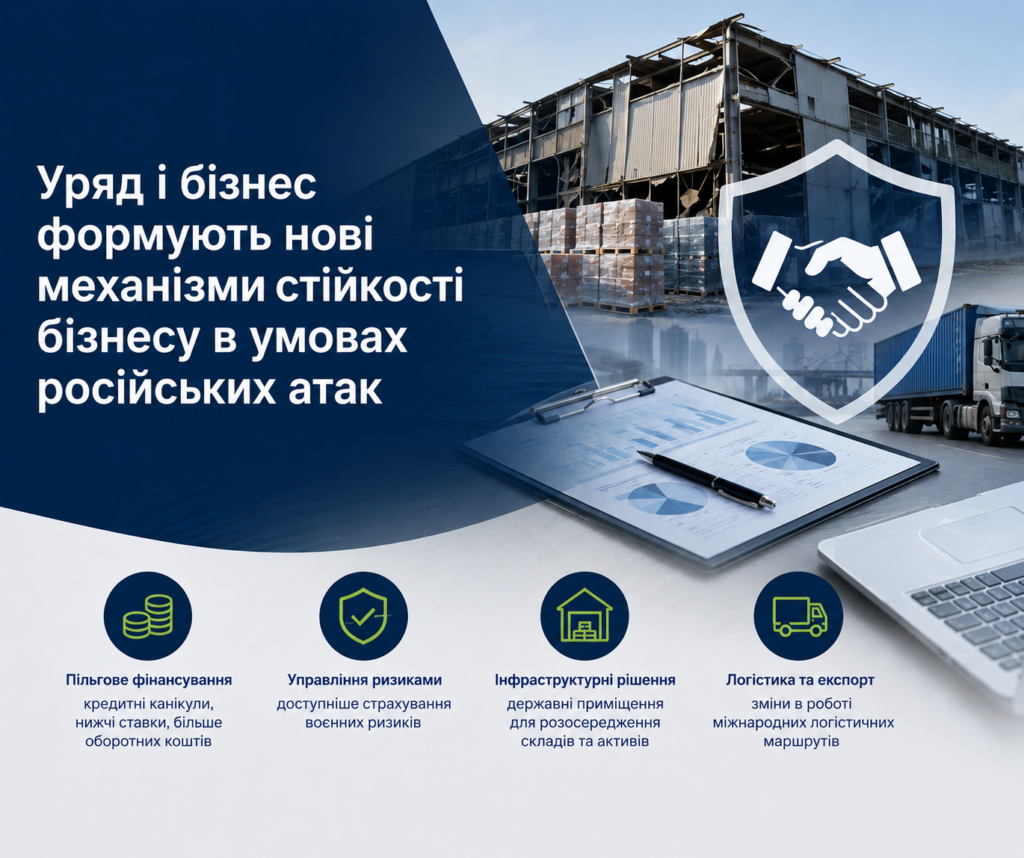
One of the first steps is to use state-owned premises to decentralise warehousing capacity. The Ministry of Economy, the Asset Recovery and Management Agency (ARMA) and the State Property Fund are expected to compile a list of facilities that could be made available to companies. This could help businesses restore logistics more quickly and avoid concentrating large inventories in a single location. (Bukvy)
Another area under consideration is financing for affected businesses. The government plans to work separately on this issue with the National Bank of Ukraine and commercial banks. Options being discussed include preferential financing for the restoration of damaged facilities and changes to existing state-backed lending programmes.
Some measures have already been adopted. On 7 August, the National Bank of Ukraine allowed banks, subject to certain conditions, to carry out short-term debt restructuring for companies experiencing financial difficulties as a result of the war without automatically classifying the borrower as being in default. The mechanism will apply to restructurings carried out between 1 July 2026 and 1 September 2027. For the agricultural sector, the NBU has also changed the rules for recognising agricultural products as collateral, giving businesses greater access to financing. (National Bank of Ukraine)
On 6 August, the government also changed the terms of the Affordable Loans 5-7-9% programme for agricultural producers. The previous restriction limiting the use of loans for working capital to 20% of the total loan amount has been removed for agricultural loans. The interest rate on such working capital loans has also been reduced from 15% to 10% per annum. (Ministry of Economy of Ukraine)
The government and businesses are also discussing war-risk insurance. Existing instruments have limitations, particularly for large companies and significant inventories. Issues currently under discussion include increasing available insurance coverage and involving international partners in covering part of the cost of insurance.
Logistics is another area being addressed. The government is preparing measures to further decentralise logistics and expand customs arrangements so that companies can redirect goods more quickly if warehouses or other logistics facilities are destroyed.
Some of the proposals are coming directly from companies that have lost manufacturing and logistics facilities. Businesses are raising problems they have already encountered in practice, including the destruction of assets pledged as collateral, the high cost of insurance, difficulties in quickly relocating warehouse operations, customs procedures and limitations of existing support programmes.
The outcome of this work will depend on which of the proposals currently under discussion are translated into specific decisions by the government, the National Bank of Ukraine and other public authorities. Some measures have already been adopted, while others are expected to form part of an updated support package for businesses affected by Russian attacks.