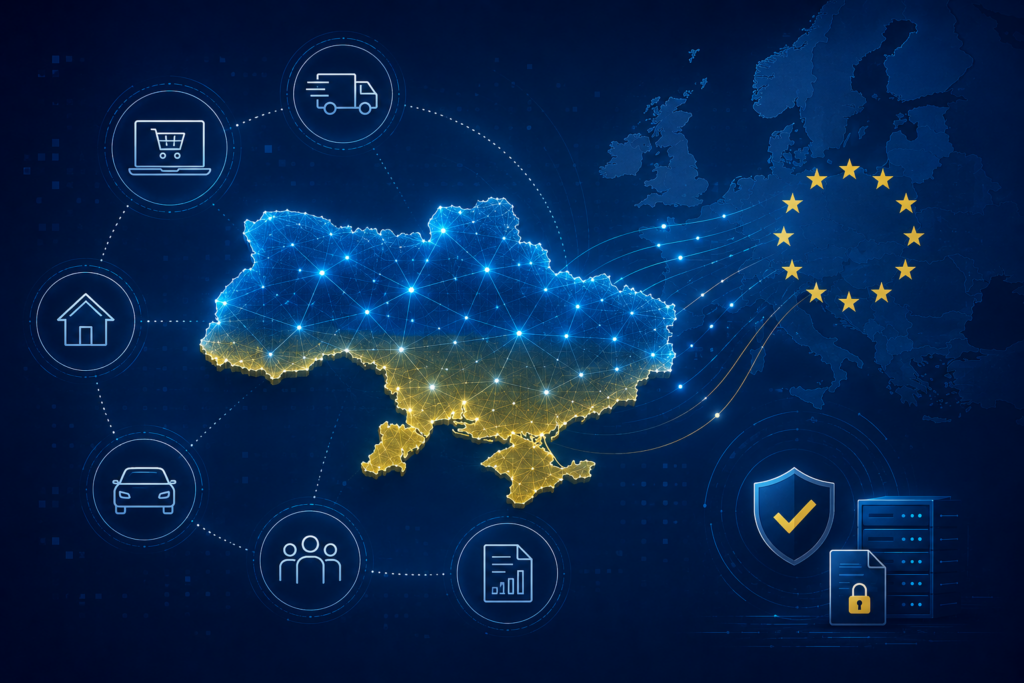
On 9 June 2026, the Verkhovna Rada of Ukraine adopted Draft Law No. 15111-d on the taxation of income earned through digital platforms. While the initiative has often been referred to in public discussions as the “OLX tax,” its scope is significantly broader. The legislation establishes new rules for digital platforms, introduces mechanisms for the international exchange of tax information, and creates a dedicated framework for taxing income earned by individuals through online marketplaces, rental platforms, ride-hailing services, delivery services, and other digital platforms.
Under the new law, operators of digital platforms will act as tax agents. They will be responsible for collecting information on users’ income, reporting such information to the tax authorities, and, in certain cases, withholding taxes on behalf of users. The new rules will apply to both Ukrainian and international platforms through which Ukrainian residents sell goods, provide services, rent out property, or generate other forms of income. For individuals, the legislation introduces a special taxation regime with a 5% personal income tax rate and a 5% military levy, provided that the established eligibility criteria are met. At the same time, occasional sales of personal items through digital platforms with an annual value below the equivalent of EUR 2,000 will remain exempt from taxation.
One of the most significant elements of the reform is the implementation of international standards for the automatic exchange of information on income generated through digital platforms. Ukraine is preparing to join a system based on the EU DAC7 Directive and the OECD Model Reporting Rules for Digital Platforms. Once the relevant international mechanisms become operational, Ukrainian tax authorities will be able to receive information on income earned by Ukrainian tax residents through foreign digital platforms, while also exchanging similar information with partner jurisdictions. As a result, the law should be viewed not merely as a tax measure, but as part of Ukraine’s broader effort to align its regulatory framework with European standards governing the digital economy.
The adoption of the legislation was also linked to Ukraine’s commitments under its cooperation programme with the International Monetary Fund. At the same time, the final version of the bill differs substantially from earlier drafts that had previously failed to secure parliamentary support. During the legislative process, several provisions that had raised concerns among businesses and platform users were revised or removed, including certain requirements related to dedicated accounts, reporting procedures, and additional administrative burdens. These adjustments contributed to broader support for the legislation among market participants.
For businesses, the significance of this reform extends well beyond taxation. The law establishes a new model of interaction between the state, digital platforms, and platform users. Platform operators will face new obligations related to user identification, data collection, reporting, and compliance procedures. Companies operating in e-commerce, transportation, delivery services, property rentals, and other platform-based sectors should closely monitor the development of secondary legislation, reporting requirements, and regulatory guidance that will determine how the new framework is implemented in practice.
The law also contains several related policy measures. These include new rules governing the online sale of alcohol and tobacco products, the introduction of control mechanisms for such sales, and tax relief measures concerning land plots associated with property destroyed as a result of Russia’s aggression against Ukraine. This demonstrates that Draft Law No. 15111-d has evolved into a comprehensive regulatory package addressing several areas of public policy simultaneously.
Most of the law’s provisions are expected to enter into force on 1 January 2027. The transition period is intended to provide public authorities, digital platforms, businesses, and users with sufficient time to adapt to the new requirements. However, the practical implementation of the international information exchange mechanisms will depend on Ukraine’s accession to the relevant international agreements and the technical readiness of the participating jurisdictions.
Source: BBC News Ukraine, Ekonomichna Pravda, materials of the Verkhovna Rada of Ukraine, public statements by digital platform market participants, based on the materials provided.